
How to Talk with Voters
The midterm elections could change the world, and inspiring others to vote for Democrats is one of the most important things you can do
Your words make a difference
Your conversations before the midterms with neighbors, co-workers, friends, and relatives are an opportunity to gain votes for Democrats.
Are you hesitant to talk about elections? Maybe because you want to avoid conflict, or you're not sure what to say? We have tips that will make it surprisingly easy to start the conversation.
Or, are you an experienced canvasser? Our latest set of suggestions could make your communication even more effective.
Six Tips for Talking with Voters
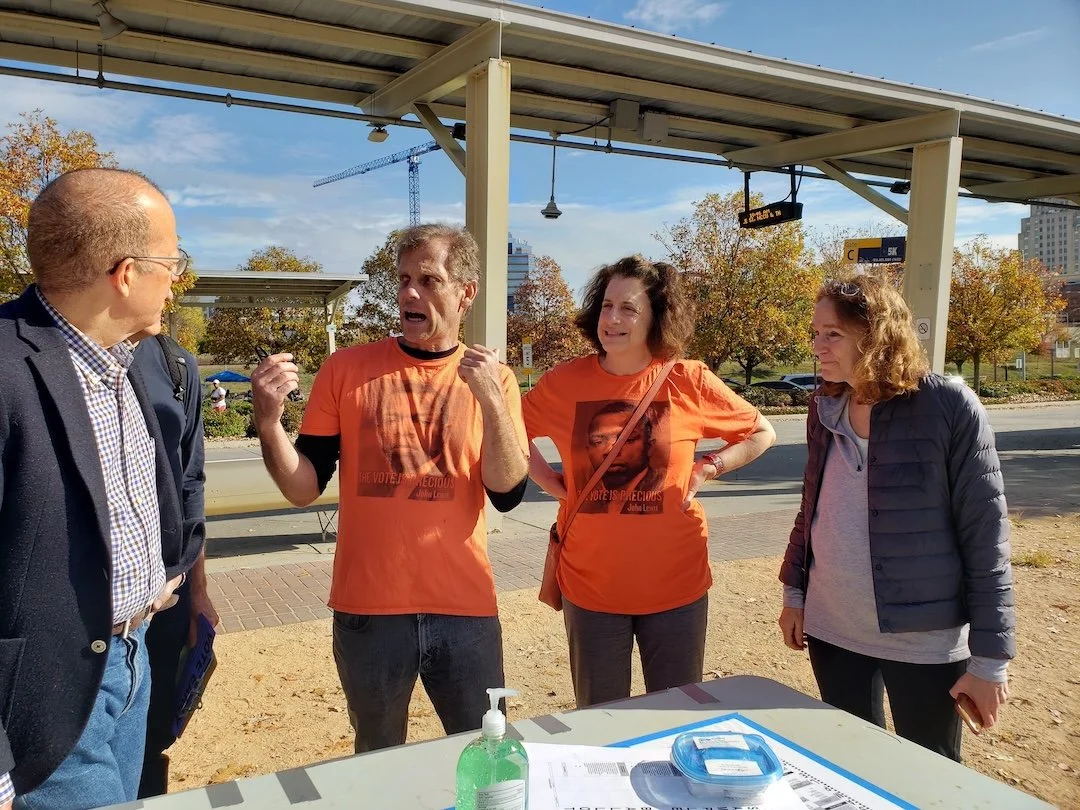
Tip 1: Be Warm and Friendly
You're talking with voters because you care about our country and each citizen's right to vote. This is a generous, thoughtful act, not an attack. You don't need to be an expert. You don't need to memorize lots of facts. You can relax.
Make sure your body language is open -- stand back and leave some room.
Find a way to connect. For instance, if you’re talking with someone you know, start with something you share — some common ground — before you jump into politics.
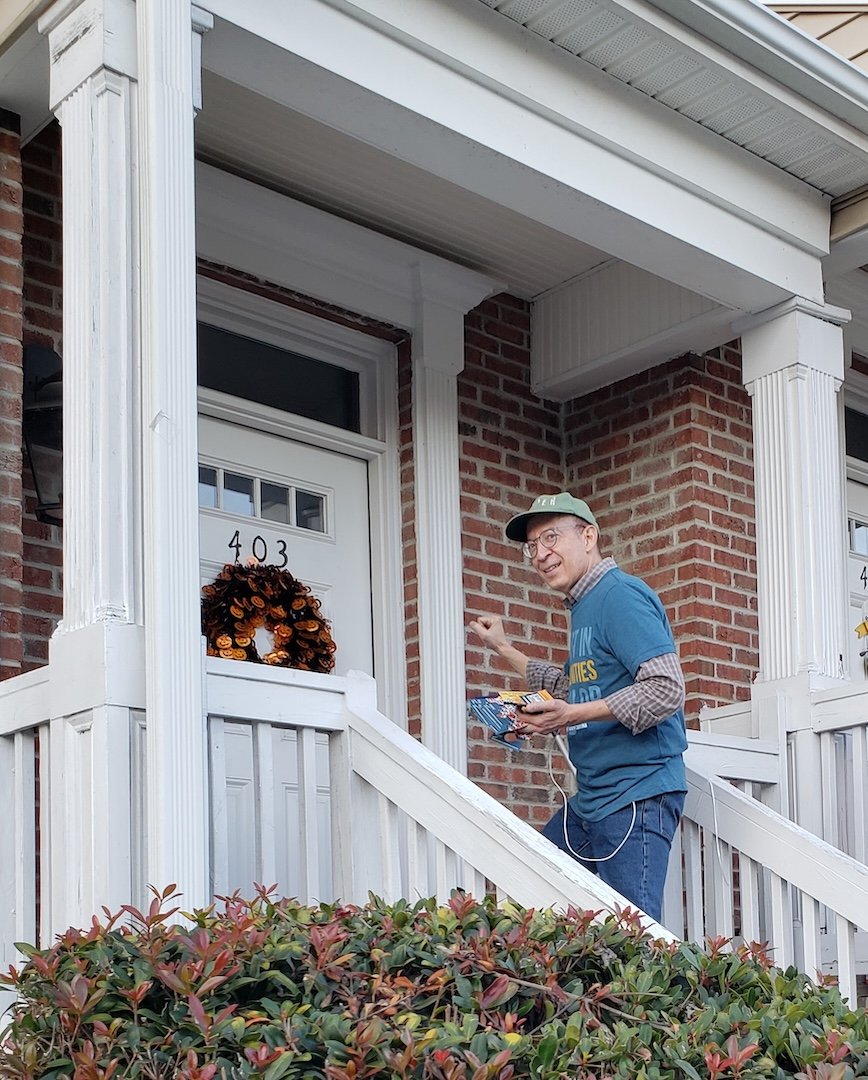
Or, if you’re canvassing or talking with people you don't know, look around before you meet them — are they wearing a hat or t-shirt that you like? Did you notice a pet, a garden, a welcome mat, or anything that means something to you? If so, consider mentioning this detail as you get started.
REMEMBER: Facts do not convince voters. A friendly, emotional connection does. If you help voters realize that our team is on their side, and the other team is not, that’s what affects voting.
Tip 2: Speak with everyone – not just Democrats
If a voter identifies as Republican or Independent, that's an opportunity to listen and hear what they care about.
If you detect that a voter is die-hard MAGA, no need to continue the conversation. Better to move on and find someone who might share some common ground.
No matter who you talk with about voting, speak plainly and avoid political jargon.
Not sure what qualifies as jargon? Watch this video for some tips.
Tip 3: Listen with curiosity, and ask questions
Start by asking questions and listening carefully to what each voter says. Don’t tell voters what they should think. Wait and hear what matters to them.
When you introduce yourself, make it clear that you are there to hear what the voter has to say.
My name is X and I’m a volunteer for CANDIDATE Y, and we’ve been asked to find out what you think about how things are going in the country right now.
Begin with these types of questions:
If you could change 2 - 3 things about the country right now, what would they be? Do you think things are headed in the right direction or the wrong direction?
I'm concerned about some things in our country today – and I'm wondering, is there anything that's concerning you and your family?
I'm concerned about some issues in the upcoming election – and I'm wondering, what issues are important to you?
What do you wish politicians knew about you or your community? What do you think their priorities should be?
Tip 4: Acknowledge each voter's concerns
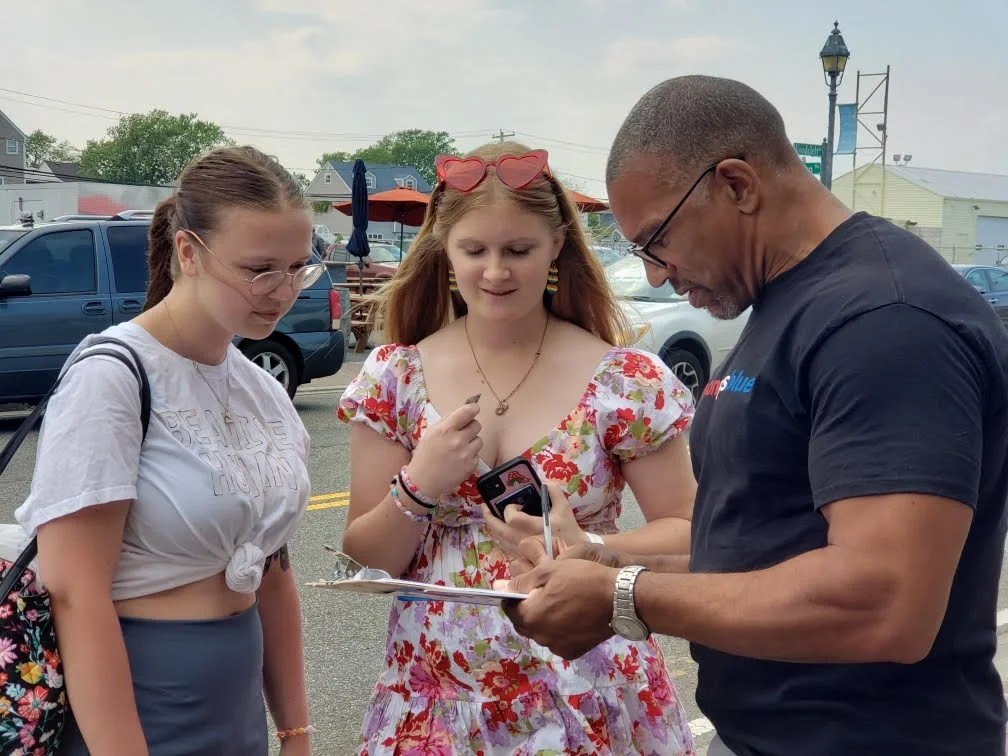
Confirm that you’ve heard what a voter tells you, and be curious — ask followup questions.
Some ways to confirm that you’ve heard them:
“That sounds really ______” (difficult/sad/frustrating/fun)
“Totally understood. A lot of people are feeling that way.”
“I know exactly what you mean. I'm concerned about the same thing. That’s partly why I’m out here.”
“You are not alone. That is so important to many of us.”
Some followup questions, or comments:
“Tell me more about that.”
“I agree. I feel the same way because of what happened in my own life.” [Briefly tell a personal story about you, or someone you know.]
Tip 5: Name the villains and their motives
Make the connection between a voter’s concerns and the villains who are responsible – whether it's Trump, Congress, tech billionaires, or others.
If you’re talking with a Trump voter who seems open and possibly regretful about voting for Trump, say “I know this isn’t what you voted for.”
The cost of living keeps rising — So many of us are struggling to pay our bills because Trump keeps raising tariffs and has gotten us into another endless war.
Misguided priorities — He’s building a gold-plated ballroom instead of controlling costs for me and my family.
Healthcare costs more and is harder to get — Millions of people couldn’t afford coverage after the Republican Congress let federal subsidies expire. And our local hospitals are closing — especially in rural areas — because Congress cut Medicare and Medicaid reimbursements.
Another endless war — Trump promised no war, then chose a war in Iran — without a reason or a plan.
Corruption — Trump, his sons, and his donors are making billions off his presidency while we pay higher costs at the gas station and the grocery store. They give pardons to criminals and cover-ups for his friends (like Jeffrey Epstein)
Harassing our neighbors — Trump told us he was going to deport criminals, but instead he’s rounding up our hardworking neighbors just because of the way they look.
You don’t need every fact and figure on the tip of your tongue. Connecting on an emotional level is more persuasive.
If a voter raises a question and you don’t have the facts, remind them that you are a volunteer and offer to get the answer by reaching out to the campaign. Or, you could even look it up together on your phone.

Credit: Easy-Peasy.AI
Tip 6: Stress the importance of voting early
Remind everyone to vote early.
“It is very important to vote early – so if there are any problems, you’ll have time to take care of it.”
“Do you have a plan to vote early? Do you know how and where you can vote early?”
Social pressure is the most effective way to get someone to commit to vote.
If you’re talking with a friend, tell them that you’re voting early and you want to know if they’ll do the same.
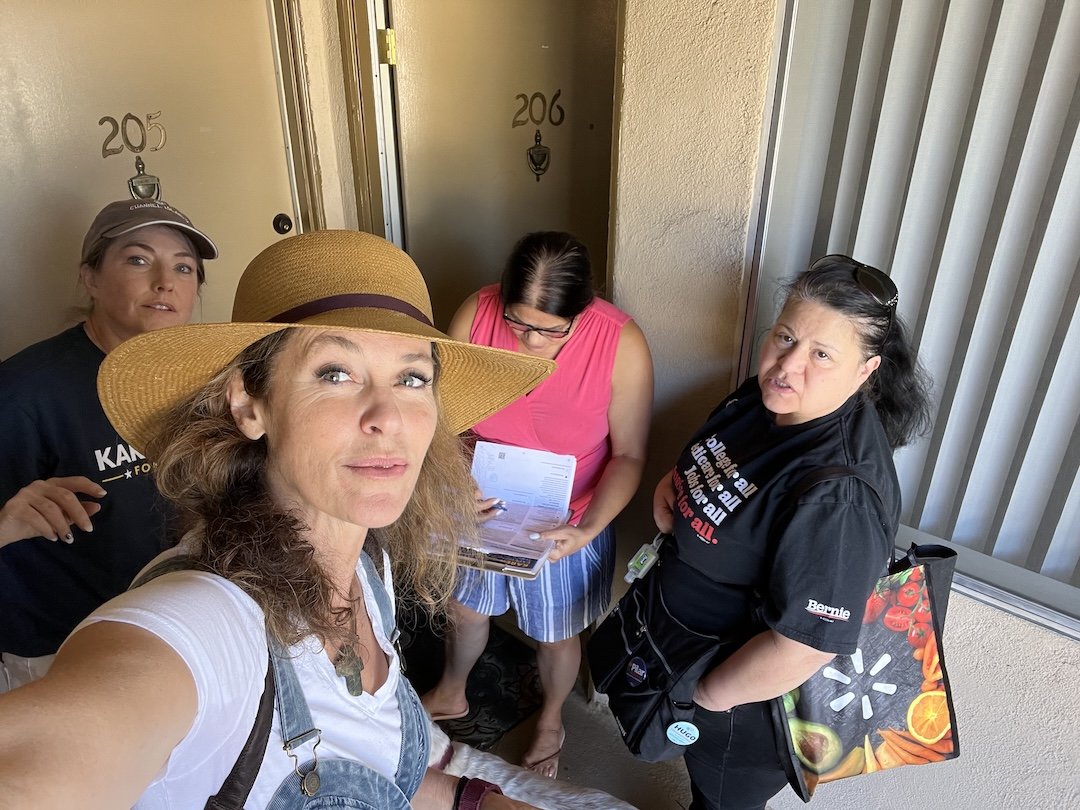
If you’re canvassing, you could remind voters about their past voting records (which you may have) — and encourage them to vote again.
The final words….
Before you leave, confirm that you heard what the voter said.
“I really enjoyed speaking with you. I’ll be thinking about what you told me, and I hope everything goes well for you.”
What to Say to People Who Don’t Believe Their Vote Matters
If they say…
“They’ve already decided who will win. It’s rigged.”
You can say…
“The state and local elections can change everything, and they’re sometimes decided by a few hundred votes. So your vote does matter.”
If they say…
“One vote doesn’t matter when millions are voting.”
You can say…
“They want us to think that our votes don’t matter. But if we all vote, then our votes do matter — and we can make a change.
If they say…
“I’m not interested in politics.”
You can say…
“This isn’t about politics. It’s about being able to buy a house, pay for gas, see a doctor, drink the water. The way we fix those things is by voting.”
If they say…
“Voting is a waste of time.”
You can say…
“That’s what they want us to believe so we don’t vote against them. They want to take away our rights. But by voting, we tell them they can’t control us.”
For more about what to bring, what to wear, and what to say when you’re canvassing, check out our canvassing guide